What’s Influencing Purchase Decisions This Festive Season
Rethinking How India Shops, Eats & Celebrates As India evolves, so do the ways we shop, eat, and celebrate, reflecting changing lifestyles and preferences.
Key Takeaways & Strategic Implications
Health And Wellness Focus
Prioritise health-driven categories—apps, fitness tools, and diagnostic services—to capture the projected 70% surge in wellness-related festive spending.
Omnichannel Integration
Seamlessly link e-commerce, quick commerce, and physical retail to capture the 38% of shoppers who discover products online but prefer to complete purchases offline.
Generational Targeting
Tailor marketing by cohort: Gen Z responds to trend-driven, discovery-led experiences, while Millennials value brand trust and wellness-oriented offerings.
Experiential Gifting
Broaden portfolios to include experiential and wellness-driven gifts, tapping into the 51% of consumers who now prefer experiences over material products.
Sweet Innovation
Reimagine festive indulgence with healthier alternatives—jaggery, dates, and millet-based sweets—to address the growing ₹84,300 crore market while meeting the demands of health-conscious consumers.
Festive Wallets: Clicks, Quick Picks & Store Trips
Festive Season Spending Distribution

Source: Hansa Research, Texttile value Chain (2025)
Experience Driven Shopping
E-commerce takes the lion’s share of festive spending, showing how convenience and variety keep carts full online.
Organised physical retail still holds strong, giving shoppers the joy of touch-and-feel before they buy. Local stores capture a healthy slice, powered by neighbourhood trust.
Quick commerce though smaller—is carving a space as the go-to for last-minute festive rescues.
Expect online and quick commerce to surge further with flash deals and instant deliveries, while local and organised stores lean on experience-driven shopping to hold their ground.
Generational Shopping Patterns—Who Shops How?
Gen Z (18-25 years):
Purchases: 8-9 times/year
Budget: ₹25,000 avg.
Festive Spending: +47%
Impulse Buys: 65%
These trendsetters shop like it is a sport—8–9 times a year with budgets around ₹25,000. Their motto? “See it. Love it. Buy it.” With 65% impulse buys and a whopping +47% festive splurge, they are the ones filling carts faster than you can say “Add to bag.”
Millennials (26-41 years):
Purchases: 5-6 times/year
Budget: ₹32,000 avg.
Festive Spending: +35%
Impulse Buys: 42%
Balancing responsibilities with FOMO, millennials shop 5–6 times a year, dropping an average of ₹32,000. They spend wisely (but not too wisely), with 42% still swayed by shiny offers and a 35%
festive bump. They are basically the Goldilocks of shopping—not too much, not too little.
Gen X and Boomers (42+ years):
Budget: ₹40,000 avg.
Festive Spending: +28%
Impulse Buys: 24%
Planned Shopping: 76%
These pros have mastered the art of planned shopping—76% of their buys are thought through, leaving only 24% to the thrill of impulse. With average budgets of ₹40,000 and +28% festive pending, they are the calm and seasoned players in the shopping game. Think chess, not checkers.
Source: Economic Times, BCG & Snap Inc. Report (2025)
Purchase Behaviour Trends—The Festive Shift
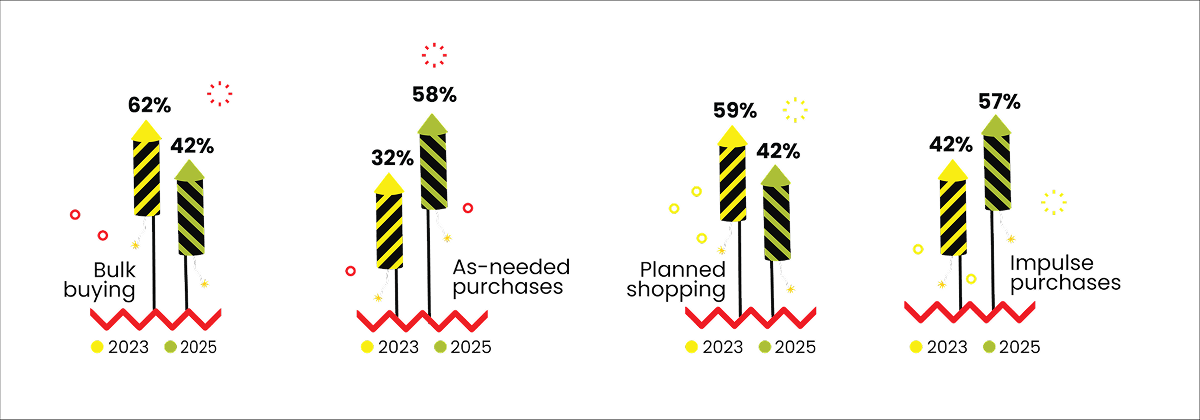
Bulk buying is on the decline (from ~62% to ~42%), as consumers move away from planned shopping towards as-needed purchases.
At the same time, impulse purchases have jumped, proving that festive offers and flashy deals still spark joy (and spending!).
jit
The rise of just-in-time shopping shows that last-minute cart fills are becoming the new normal—fuelled by quick commerce and same-day delivery.
This shift suggests that Diwali 2025 is likely to see fewer overstocked cupboards and more last-minute ‘festival-ready’ carts, as shoppers lean on convenience and festive triggers.
GST 2.0: A Festive Price Cut Bonanza
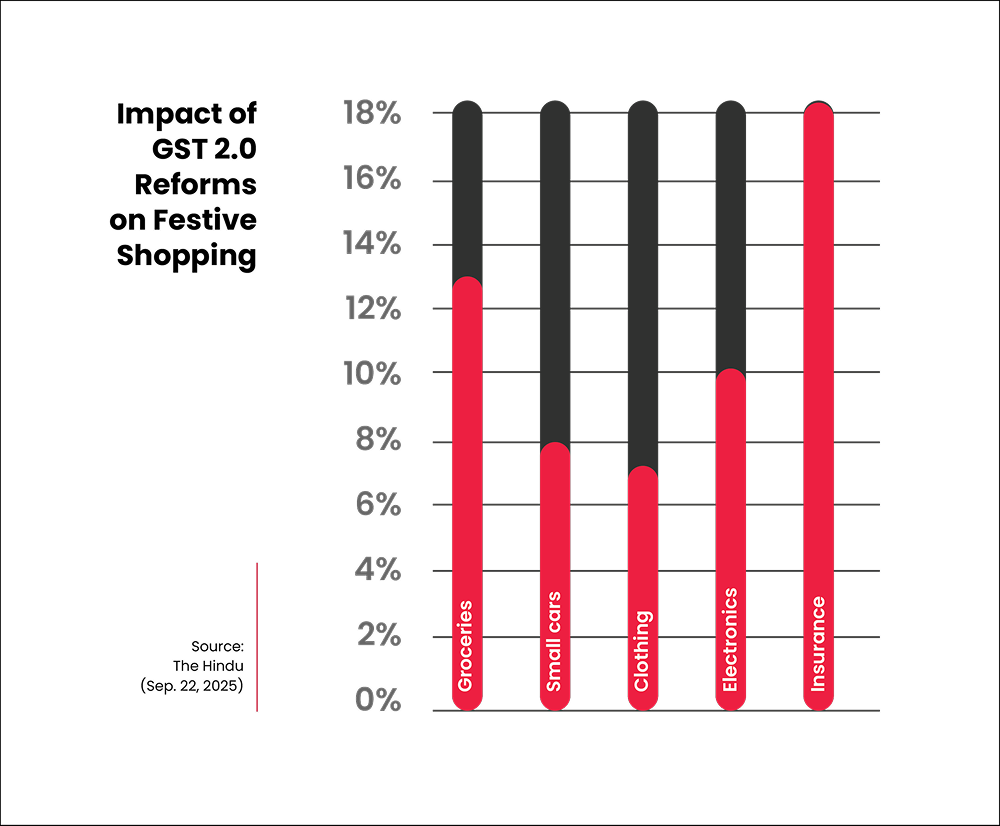
GST 2.0 reforms are set to reshape festive shopping in 2025, with the sharpest price drops forecasted in insurance (~17%) and groceries (~13%). Electronics (~10%) and small cars (~8%) also get a meaningful boost, while clothing (~7%) sees more modest relief.
GST impact on festive sales: 18% Projected increase
Source: The Hindu Business Analysis (Sept 2025)
Discounts And Coupons—The Real Festival Fireworks!
Source: ETBrandEquity Festival Shopping Trends 2025
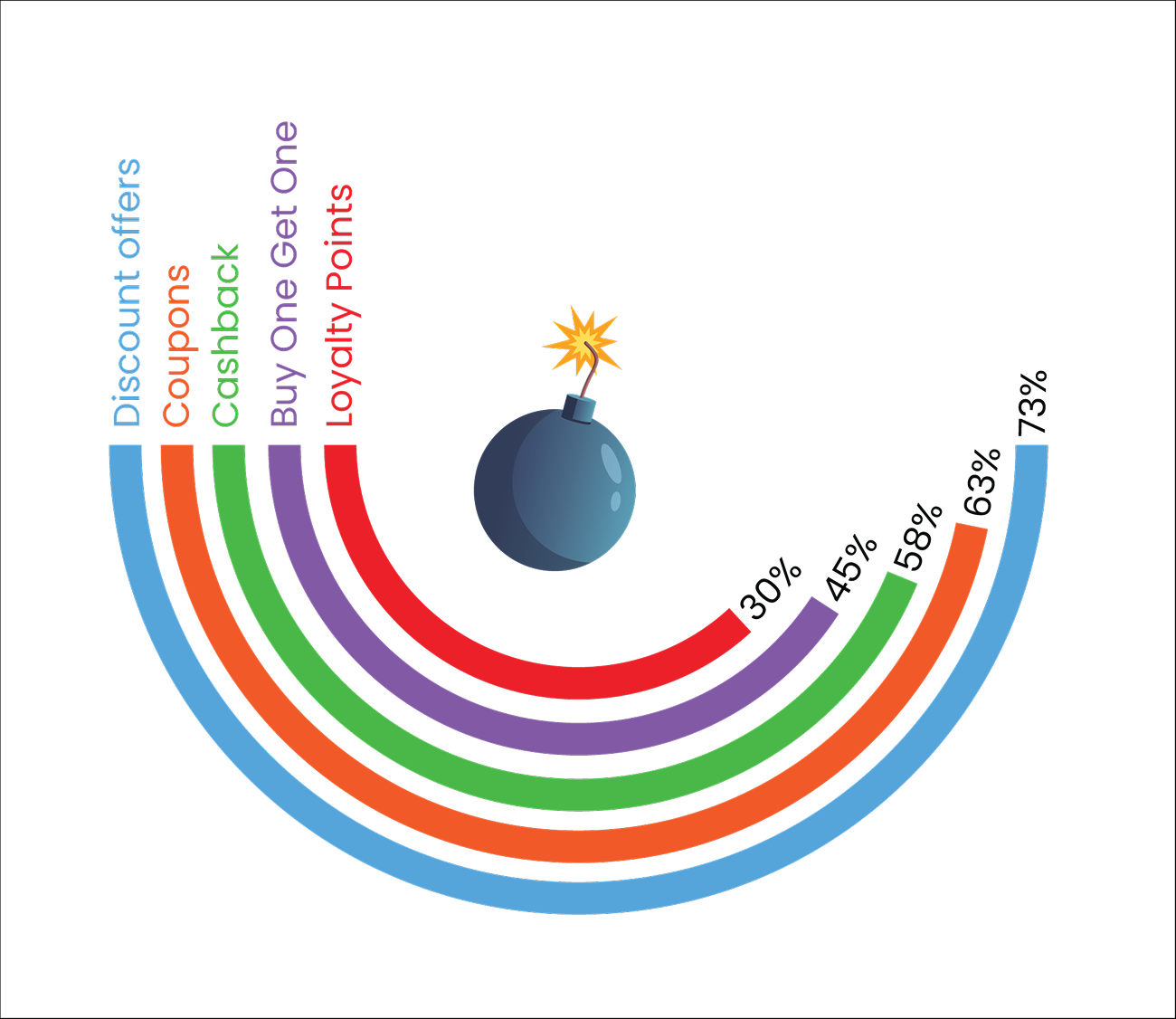
Discount offers are projected to remain the most powerful draw this festive season (73%), while coupons are likely to keep their charm (63%), offering the thrill of unlocking hidden savings.
Cashbacks are expected to appeal strongly to digital first shoppers, while BOGO deals could fuel indulgence-led buys. Loyalty points, however, may continue to lag—as consumers show preference for instant rewards over deferred benefits.
Gifting Patterns—From Boxes to Bytes to Experiences
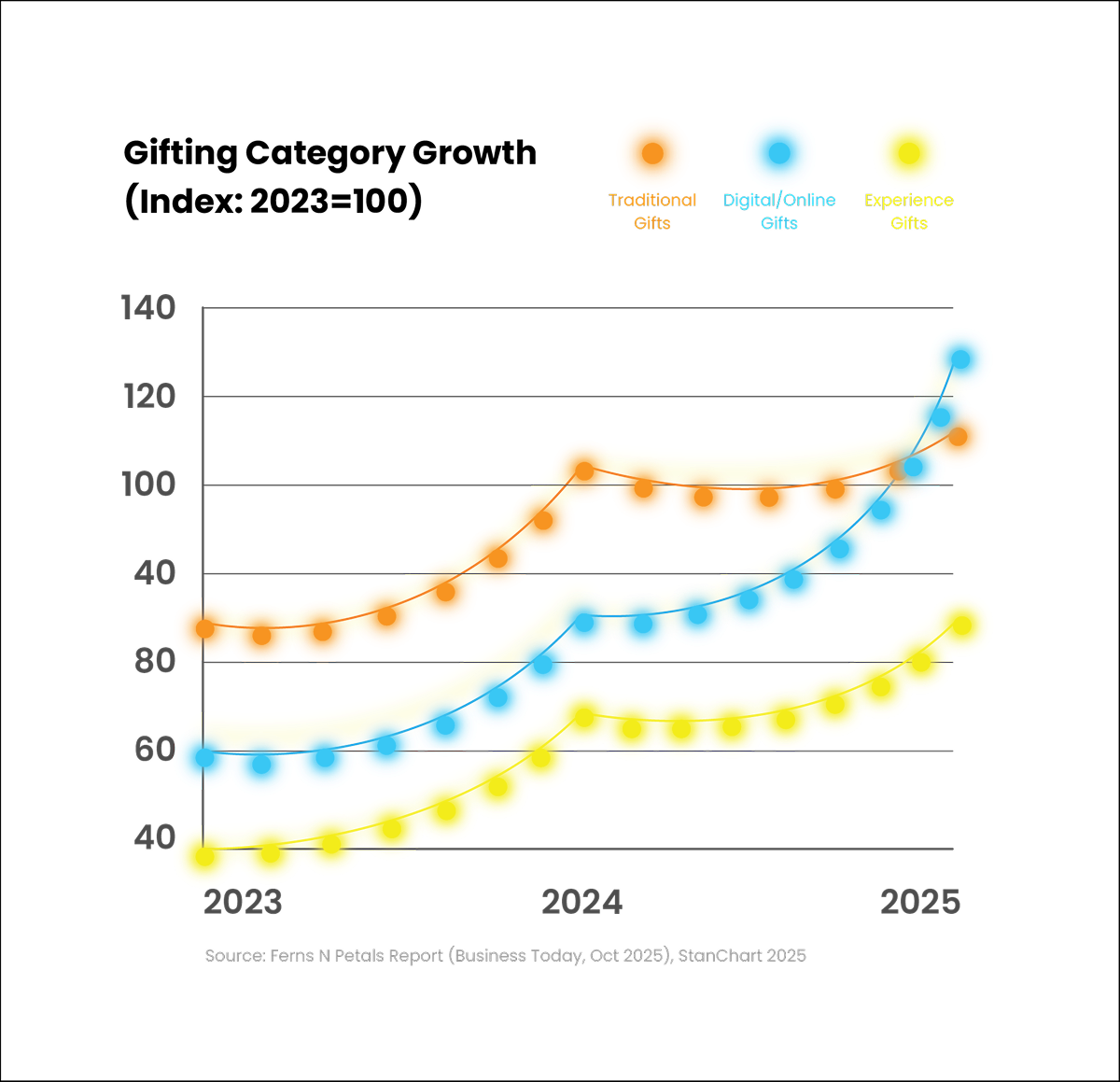
Traditional gifts continue to hold steady, inching up from their 2023 baseline. Digital and online gifts, however, are accelerating fast, already outpacing tradition by 2025.
Experience-based gifts are also climbing steadily, though from a smaller base, reflecting a shift toward “moments over material.”
Digital Gifting Platforms:
- Wellness app subscriptions: +35%
- Gym/health programme gifting: +28%
- Diwali courier volumes: +45%
- Quick commerce gifting: +62%
- E-commerce gift cards: +38%
Regional Gifting Preferences:
- North: Premium electronics, sweets
- South: Gold, traditional item
- East: Cultural items, clothing
- West: Experience gifts, home decor
Key Insights:
- 51% prefer gifting experiences over material goods.
- 78% are making eco-friendly choices while shopping.
- 42% prefer local and handmade gifts.
- Digital gift cards are growing at 38% annually.
Source: Business Today
Expect gifting to feel more digital-first and experiential, with traditional boxes of sweets sharing wallet space with e-vouchers, subscriptions, and curated experiences that promise memories beyond mithai.
Health App Usage—Festive Pause to Post-Festive Push
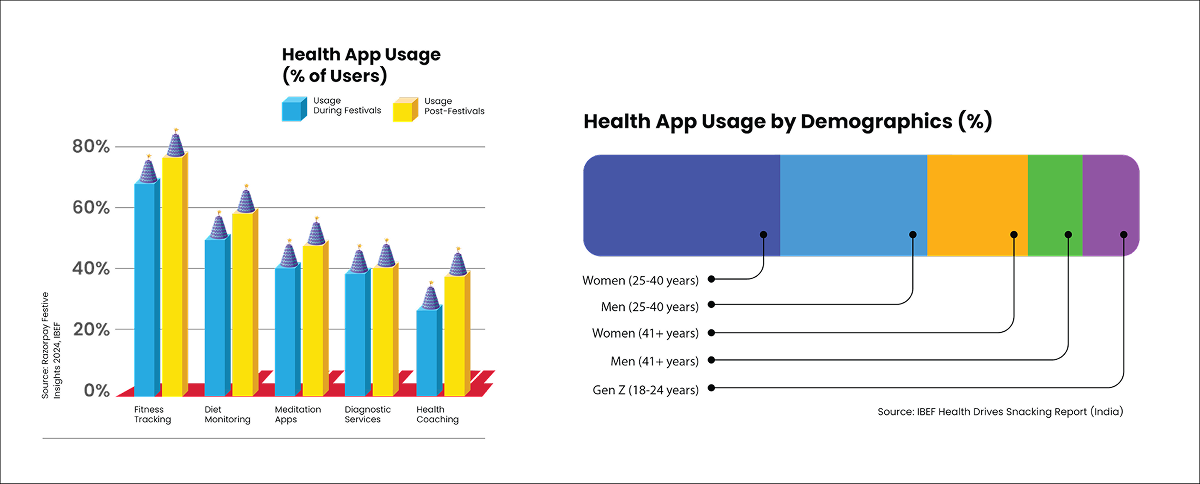
Health apps see waning usage during festivals, from fitness tracking (~67%) to diet monitoring (~72%), as consumers try to balance indulgence with awareness.
Meditation apps and diagnostic services hold mid-range adoption, while health coaching lags at the bottom—used by only about a quarter of consumers during festivals.
Post-festival, usage climbs across all categories, with noticeable spikes in diet monitoring, meditation, and health coaching—signalling the familiar ‘reset mode’ after festive excess.
70% surge in dietitian consultations during Diwali
41% of millennials focus on wellness during festivals
27% increase in fitness equipment sales
Health spending is top 3 category during the festive season.
Expect a sharper post-festive surge in digital health adoption, helping them bounce back from festive indulgence with guided diets, diagnostics, and coaching.
“Guilt-Free” Indulgence During Celebrations
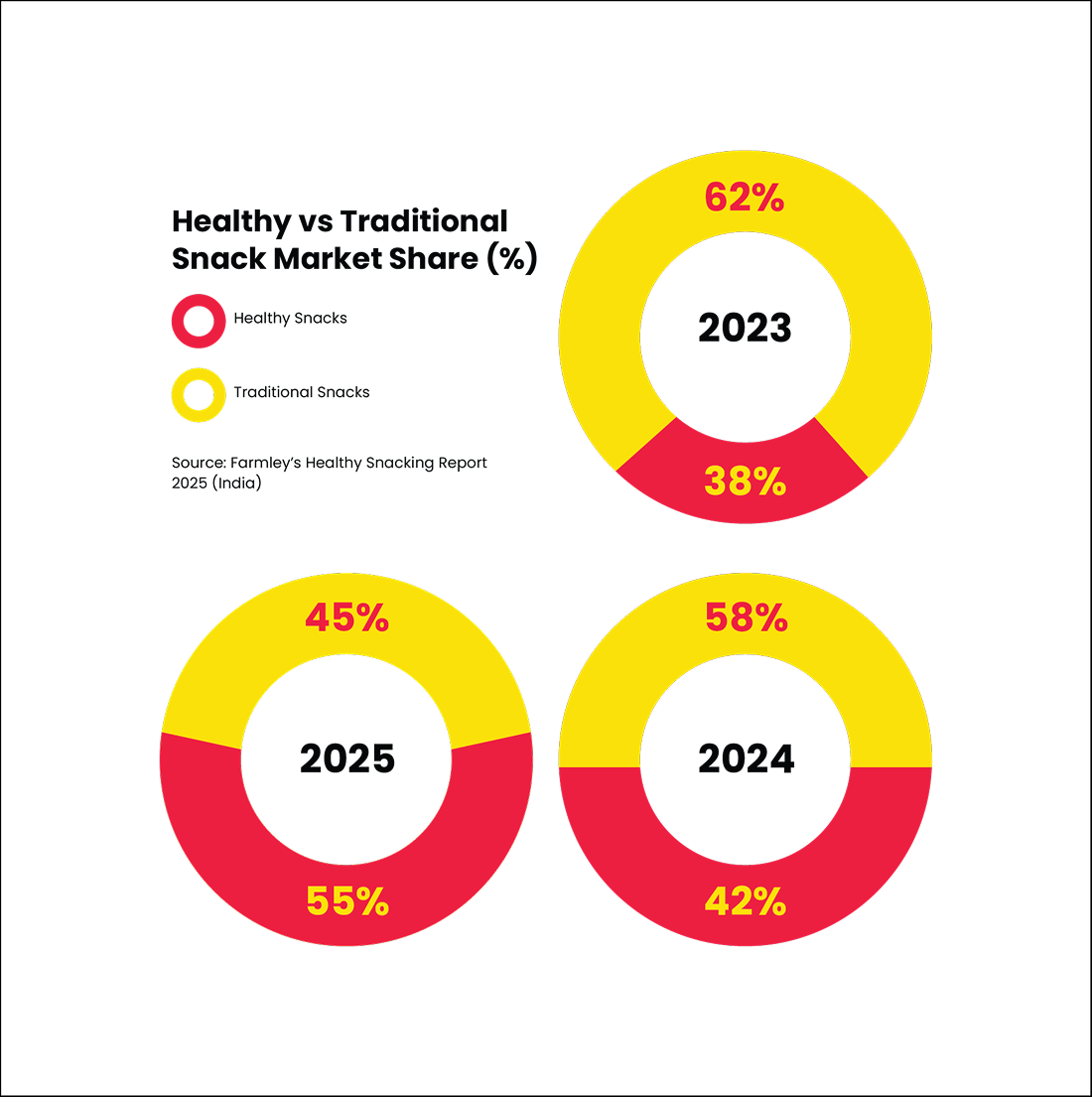
Healthy snacks are quietly muscling their way onto the plate—rising from a third of the market in 2023 to nearly half by 2025.
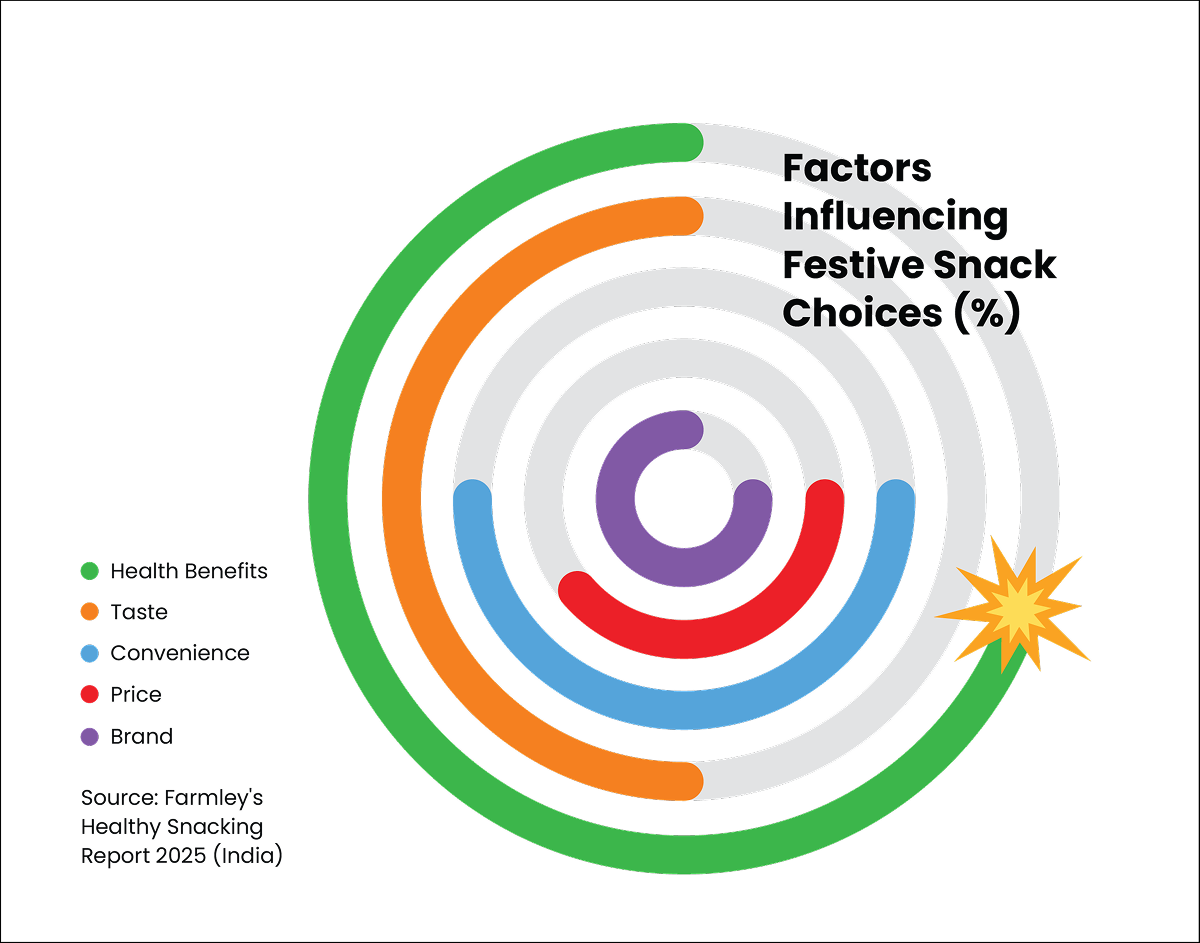
The festive thali may well feature protein bars next to pedas.
Top Healthy Snack Choices
- ⦁ Makhana (65% of consumers)
- ⦁ Roasted and flavoured dry fruits
- ⦁ Ancient grain-based snacks
- ⦁ Jaggery/date-sweetened treat
- ⦁ Millet-based laddoos
- ⦁ Probiotic-rich options
New Festive Watchpoints
Stress and Mental Wellness: Financial pressures and social obligations often heighten stress and anxiety during festivals. Expect rising engagement with meditation apps, counselling platforms, and stress management content.
Source: Samarpan Health; Healthy HCL; Ipsos
The ‘Sober-Curious’ Festive Shift: Urban Gen Z and Millennials are moderating alcohol. Non-alcoholic drink sales are projected to more than double by 2027, making this a fast-growing festive category.
Source: Open Magazine; Financial Express; The Lab Mag
Smog Triggers ‘Escape’ Tourism: Cities like Delhi consistently record hazardous AQI levels. Expect festive wellness tourism emerging as a new category—where consumers swap firecrackers for fresh air.
Source: ET Travel World
Key Messages for Healthcare Brands
Health is the New Gift: Consumers are moving beyond sweets and gadgets—wellness hampers, health check-ups, and fitness subscriptions are becoming aspirational festive gifts.
Healthcare brands can own this space with ‘gift of protection, gift of care’ narratives.
Be the Reset: Festive indulgence is followed by a strong consumer push for detox, diagnostics, and recovery routines. Be there as their ‘reset’ partner.
Curate Mindful Festive Experiences: A rising share of consumers are rethinking festive excess. Healthcare brands shouldn’t just echo this trend, but lead it—by educating, inspiring.
Pollution and Prevention: Seasonal spikes in air pollution (esp. Delhi NCR) make respiratory health highly relevant. Healthcare players can drive timely awareness campaigns and preventive solutions.
Omnichannel Health Journeys: Consumers discover health offerings online but seek trusted offline touchpoints for action (diagnostics, pharmacies, and clinics). Brands must integrate digital discovery with physical access for a seamless festive experience.
Festival marketing: When done right, festive activations move beyond seasonal wins. They aid stronger brand affinity and consumer loyalty long after the festive seasons.
‘Post-Diwali Detox Checks.’
‘Own the Mithai Moment.’
Messaging Transformation For Health-Focused Festive Brands
From Defensive to Celebratory –
Instead of: “Don’t overdo sugar/oil, it’s bad for you.”
Try: “Celebrate fully, but celebrate smart.”
From Functional Claims to Emotional Payoff –
Instead of: Zero calories/cholesterol-free/heart-healthy.
Try: Enjoy Diwali with lightness in your heart and happiness on your plate.
From Individual Health to Collective Well-Being –
Instead of: Focus on your sugar levels and heart health.
Try: Gift health, share wellness.
Durga Puja As Big As Diwali
Durga Puja leads the way in festival adspend rise.
Ad expenditure during India’s festival season is projected to increase between 10-15%, with spending in the current Durga Puja festivities growing even faster.
A summer study by InMobi found that 83% of festive shoppers have bigger budgets than last year.
e4m reports industry estimates that ad spending around Durga Puja could be up by as much as 25% this year, with some brands earmarking around a third of all festive spending for this festival.
Durga Puja may be primarily a regional festival in India’s east, but for some brands it is as important as national festivals like Diwali.
Diwali isn’t just celebrated. It’s felt.
Beyond shopping lists, wellness trends, or even mindful choices, Diwali has always been about something deeper—the comfort of coming home, the joy of being a family, and the smell of mom’s cooking.
It is a holiday everyone waits for—from school days to office.
The laddoos may add a few calories but they also add a ton of joy, nostalgia, and togetherness.
In the end, it is not just a celebration, it is a memory bank.
Happy Diwali!
About BrandCare
BrandCare is where science meets storytelling—and where healthcare marketing learns to speak human again.
For over two decades, we have helped health and wellness brands find meaning in a world crowded with messages. We translate medical science into ideas that move people—ideas that are grounded in truth, empathy, and a touch of wit.
We are not trend chasers, we are sense makers. We watch how culture, care, and consumer behaviour shift, and help brands stay relevant by staying real. Whether it is guiding a digital transformation, decoding the new physician mindset, or crafting a festive wellness reset, we bring thought leadership that listens before it speaks.
Get the complete report Download Report